

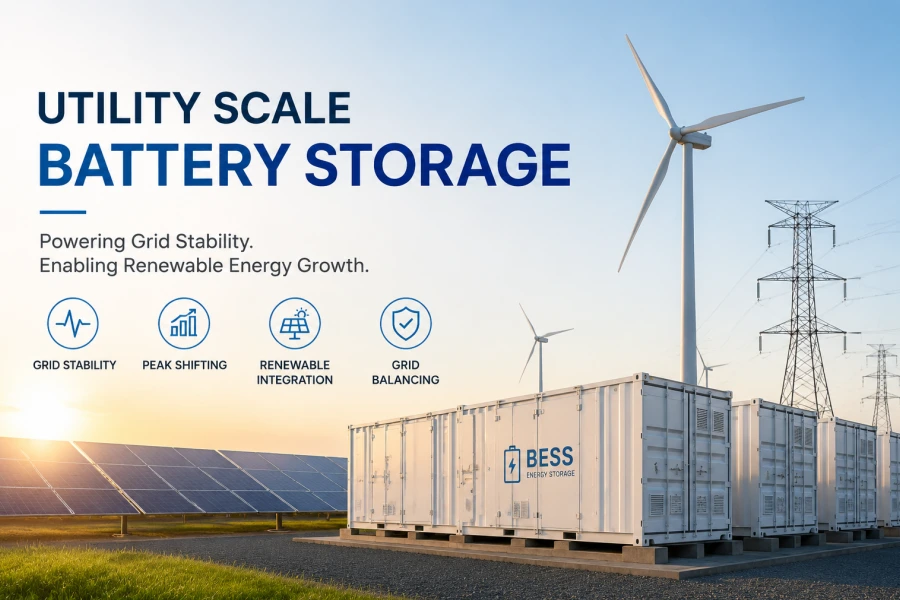
Utility Scale Battery Storage: Supporting Grid Stability and Renewable Energy Growth
The global transition toward renewable energy is accelerating rapidly. Solar photovoltaic and wind power are becoming major sources of electricity generation, helping countries reduce carbon emissions and improve energy independence.
However, renewable energy sources are naturally intermittent. Solar generation changes with sunlight availability, while wind power fluctuates depending on weather conditions. These characteristics create new challenges for power grids, including generation instability, peak demand pressure and frequency management.
Utility scale battery energy storage systems (Utility BESS) provide a reliable solution by storing excess renewable energy and releasing power when needed. From 1MWh modular battery storage systems to 100MWh+ utility-scale energy storage projects, large-scale battery solutions are becoming essential infrastructure for modern smart grids.
Splendor Energy provides integrated utility energy storage solutions, including system design, equipment integration and complete BESS supply for renewable energy developers, utilities, EPC contractors and industrial power projects worldwide.
1. The Growth of Renewable Energy and the Need for Grid Storage
Over the past decade, renewable energy deployment has expanded significantly worldwide.
Large-scale solar farms, offshore wind projects and distributed renewable generation systems are now being connected to national power grids at an unprecedented speed.
However, traditional power grids were originally designed around stable fossil fuel generation sources. Renewable energy introduces several technical challenges:
Intermittent Power Generation
Solar farms generate electricity only during daylight hours, creating a mismatch between electricity production and consumption.
For example:
- Solar peak generation: 10:00–15:00
- Residential and commercial peak demand: 17:00–22:00
Without energy storage, large amounts of renewable energy may be wasted during periods of low demand.
Grid Stability Challenges
High penetration of renewable energy can affect:
- Frequency stability
- Voltage regulation
- Power quality
- Grid balancing capability
Battery energy storage systems provide fast response capabilities, helping grid operators maintain stable electricity supply.
Increasing Electricity Demand
The rapid growth of:
- Electric vehicles
- Data centers
- Industrial automation
- Smart cities
is creating additional pressure on power networks.
Large-scale energy storage enables utilities to optimize existing infrastructure without immediately expanding generation capacity.
2. Why Utility Scale Battery Storage Is Essential
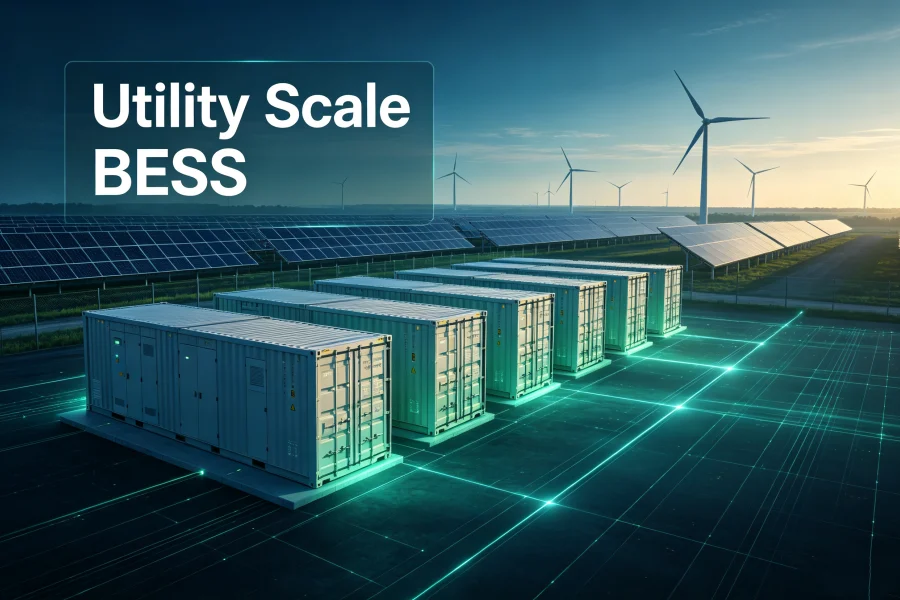
Utility BESS acts as a flexible energy resource between renewable generation and electricity demand.
Unlike traditional power plants that require minutes or hours to adjust output, battery storage systems can respond within milliseconds.
Key advantages include:
Fast Grid Response
Modern lithium battery systems can provide rapid charging and discharging:
Typical response time:
- Millisecond-level frequency response
- Seconds-level grid balancing
- Minutes-level energy shifting
This makes BESS one of the fastest grid stabilization technologies available.
Renewable Energy Smoothing
Battery storage absorbs fluctuations from renewable generation.
Example:
A 100MW solar farm combined with a 50MWh BESS can:
- Store excess solar production during midday
- Release stored energy during evening peak demand
- Reduce renewable curtailment
- Improve project revenue
Energy Independence and Grid Resilience
Large-scale battery systems provide backup capability during:
- Grid outages
- Extreme weather events
- Emergency power situations
Utility-scale storage improves overall energy security and reduces dependence on conventional backup generation.

3. Main Functions of Utility Scale BESS
3.1 Frequency Regulation
Maintaining grid frequency is one of the most important tasks for electricity networks.
Most grids operate around:
- 50Hz (Europe, Asia, Australia)
- 60Hz (North America)
When electricity supply and demand become unbalanced, frequency fluctuations occur.
Utility BESS can instantly:
- Inject power into the grid when frequency drops
- Absorb power when frequency rises
Benefits:
✓ Improved grid stability
✓ Reduced frequency deviation
✓ Faster response compared with conventional generators
3.2 Peak Shifting and Energy Arbitrage
Electricity demand varies throughout the day.
Utility battery storage enables energy shifting:
Low Demand Period
Battery charges using:
- Excess renewable energy
- Lower-cost electricity
Peak Demand Period
Battery discharges to:
- Support grid demand
- Reduce electricity costs
- Avoid additional generation requirements
Typical applications:
- Solar + BESS power plants
- Wind + BESS projects
- Utility peak shaving systems
3.3 Renewable Energy Integration
Battery storage allows higher renewable penetration by managing unpredictable generation.
Common configurations:
Solar + Utility BESS
Example:
- Solar PV Capacity: 100MW
- Battery Storage: 50MWh–200MWh
- PCS Capacity: 25MW–100MW
Applications:
- Renewable energy smoothing
- Time shifting
- Grid support
Wind + Battery Storage
Example:
- Wind Farm: 200MW
- BESS Capacity: 100MWh+
Benefits:
- Stable power output
- Reduced grid fluctuations
- Improved renewable utilization
3.4 Grid Balancing and Ancillary Services
Utility BESS can provide multiple grid services:
| FUNCTION | DESCRIPTION |
|---|---|
| Frequency Regulation | Maintains grid frequency stability |
| Voltage Support | Improves voltage quality |
| Peak Shaving | Reduces peak electricity demand |
| Black Start | Restores grid operation after blackout |
| Load Balancing | Matches generation and consumption |
These capabilities make battery storage a critical component of future smart grids.
4. Containerized Utility BESS Solutions
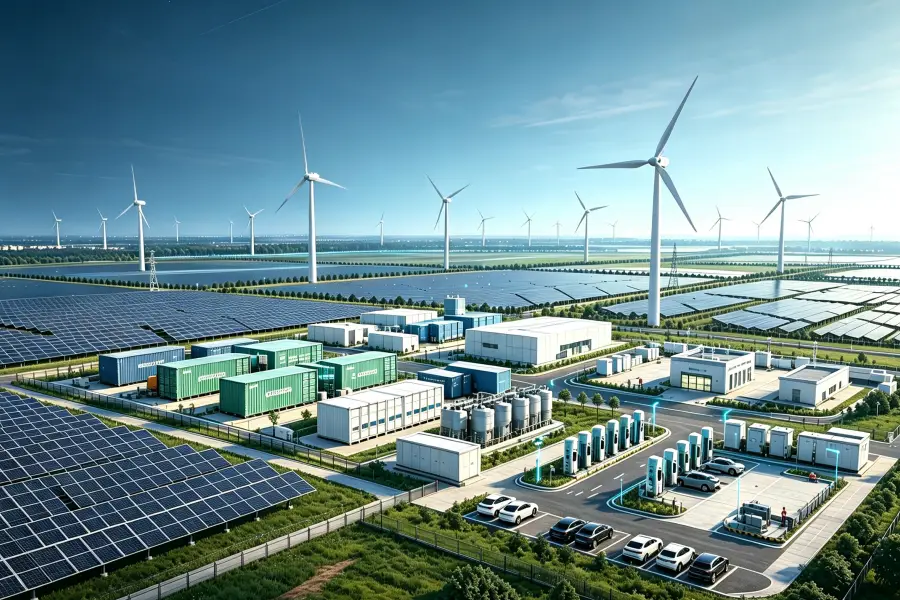
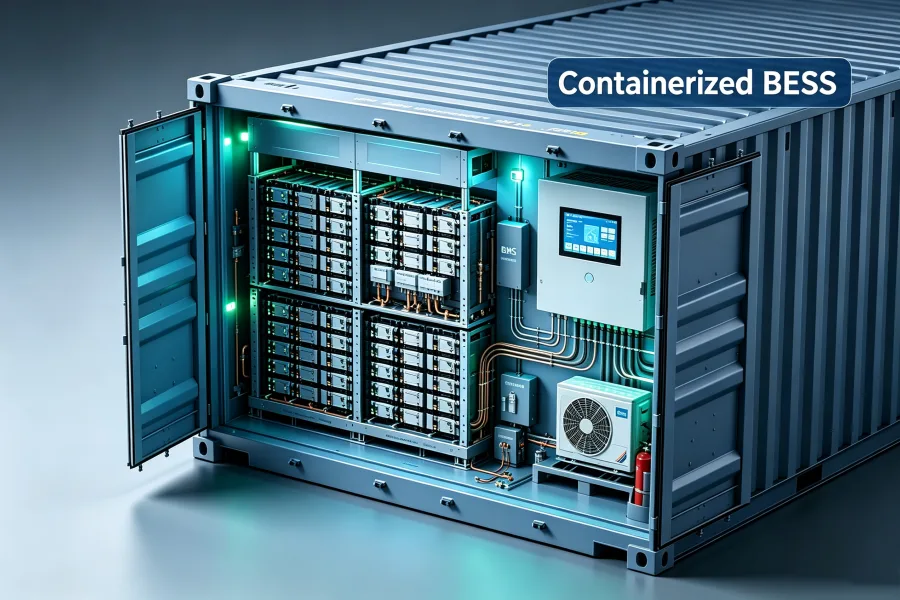
Modern utility battery systems use modular containerized designs for easier transportation, installation and expansion.
A typical containerized BESS includes:
- Lithium iron phosphate (LiFePO4) battery modules
- Battery Management System (BMS)
- Power Conversion System (PCS)
- Energy Management System (EMS)
- Thermal management system
- Fire protection system
- HVAC cooling system
- Medium voltage transformer
- Switchgear equipment
1MWh+ Utility Battery Storage System
Suitable for:
- Small renewable power plants
- Industrial microgrids
- Distributed energy projects
Typical configuration:
- Capacity: 1MWh–5MWh
- Battery Chemistry: LFP
- Container Design: 20ft / 40ft
- Voltage: 800Vdc–1500Vdc
- Cycle Life: 6000+ cycles
Applications:
✓ Solar farms
✓ Wind projects
✓ Commercial grid support
5MWh+ Liquid Cooling BESS System
Large-scale projects increasingly use liquid-cooled battery containers.
Typical specifications:
- Energy Capacity: 5MWh+
- Battery Cell: 314Ah LFP
- Rated Voltage: 1331Vdc
- Container Size: 20ft
- Cooling: Liquid Cooling
- Protection Level: IP55/IP65
Advantages:
- Higher energy density
- Better temperature control
- Longer battery lifetime
- Improved safety performance
100MWh+ Utility Energy Storage Projects
Large renewable energy projects require hundreds of megawatt-hours of storage capacity.
Example project configuration:
200MW Solar Farm + 100MWh Battery Storage System
System includes:
- 100MWh containerized BESS
- MV transformers
- PCS units
- EMS platform
- Grid connection equipment
Benefits:
- Renewable energy shifting
- Grid stability improvement
- Reduced fossil fuel dependency
5. Future Trends of Utility Battery Energy Storage
Longer Duration Energy Storage
Future grids require storage systems capable of longer discharge periods:
Current:
- 1–4 hours storage
Future:
- 6–12 hours long-duration storage
AI-Based Energy Management
Advanced EMS platforms will use:
- Artificial intelligence
- Weather forecasting
- Electricity price prediction
- Automated dispatch optimization
to maximize battery performance and economic benefits.
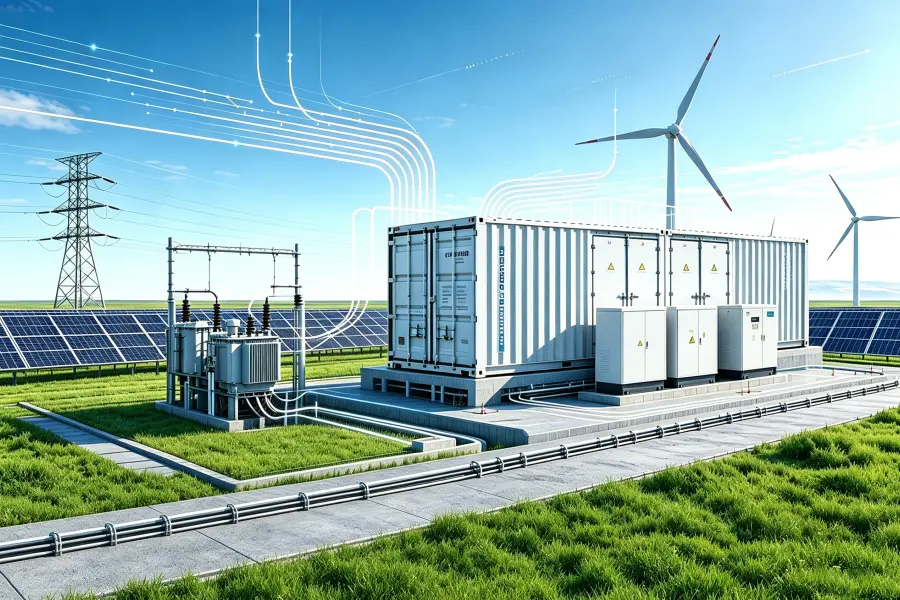
Renewable Energy Hubs
Future energy infrastructure will combine:
- Solar PV
- Wind power
- Battery storage
- Hydrogen systems
- EV charging networks
creating integrated renewable energy hubs.
Global Expansion of Grid Battery Storage
Major markets include:
- United States
- Europe
- Australia
- Middle East
- Southeast Asia
Driven by:
- Renewable energy targets
- Grid modernization programs
- Energy security requirements
6. Why Choose Splendor Energy for Utility Scale BESS Solutions?
Splendor Energy provides comprehensive utility battery storage solutions for global renewable energy projects.
Our capabilities include:
System Design
Customized BESS architecture based on:
- Grid requirements
- Renewable generation profile
- Project capacity
- Local regulations
Complete Equipment Supply
Solutions include:
- Battery containers
- PCS
- EMS
- MV transformers
- Switchgear
- Grid connection equipment
Flexible Project Scale
From:
1MWh modular battery storage systems
to:
100MWh+ utility-scale energy storage projects
we support different renewable energy applications worldwide.
Conclusion
Utility scale battery energy storage systems are becoming a fundamental technology for the future energy network.
By improving grid stability, supporting renewable integration and enabling flexible electricity management, large-scale battery storage helps accelerate the global transition toward cleaner and more resilient power systems.
From 1MWh containerized BESS solutions to 100MWh+ utility energy storage projects, Splendor Energy delivers integrated solutions designed for modern renewable energy infrastructure.
CTA
Develop Your Utility Energy Storage Project With Splendor Energy
Looking for a reliable Utility Scale BESS supplier and energy storage solution partner?
Contact Splendor Energy for customized battery storage system design, equipment integration and global project support.
Explore Utility Energy Storage Solutions →