

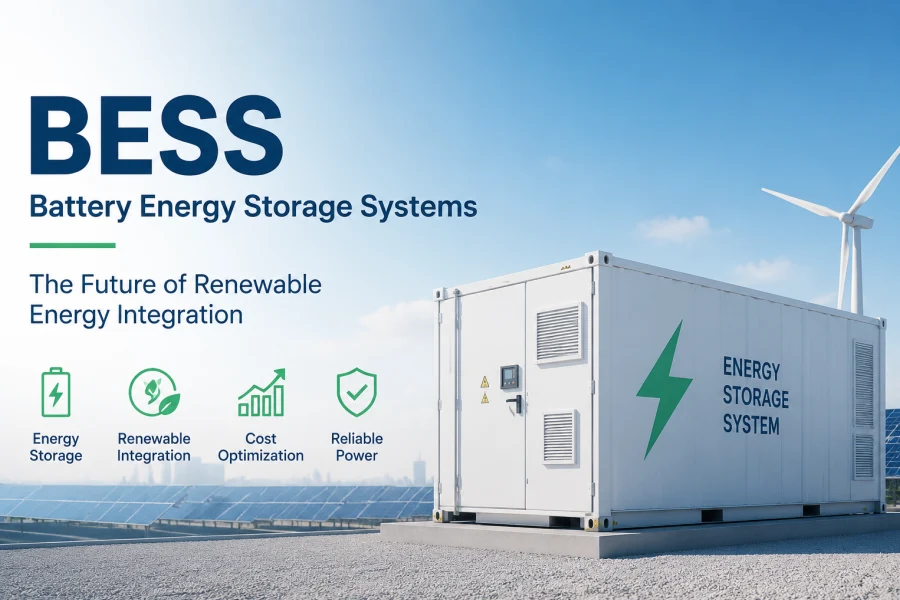
Battery Energy Storage Systems (BESS): The Future of Renewable Energy Integration
The global transition toward renewable energy is accelerating rapidly, with solar and wind power becoming essential components of modern energy infrastructure. However, renewable energy generation is naturally variable, creating new challenges for grid stability, energy reliability, and power management.
Battery Energy Storage Systems (BESS) provide the critical solution by storing excess renewable energy and delivering electricity when it is needed most. From commercial facilities and industrial plants to large-scale renewable energy projects, BESS enables smarter, more flexible, and more resilient energy systems.
As an integrated energy solution provider, Splendor Energy delivers advanced BESS solutions combining battery technology, power conversion systems, intelligent energy management, and complete system integration for global energy projects.
What Is a Battery Energy Storage System (BESS)?
A Battery Energy Storage System (BESS) is an integrated energy storage solution designed to capture electrical energy, store it in battery modules, and release it according to energy demand, grid conditions, or operational requirements.
Unlike traditional backup power systems that only provide electricity during outages, modern BESS solutions actively participate in daily energy optimization by intelligently controlling when energy is stored and when it is discharged.
A complete BESS typically includes:
- Battery cells and battery modules
- Battery Management System (BMS)
- Power Conversion System (PCS)
- Energy Management System (EMS)
- Thermal management system
- Fire protection system
- Electrical protection and control equipment
- Containerized or cabinet-based enclosure
Through intelligent coordination of these components, BESS transforms renewable energy from an intermittent power source into a reliable and controllable energy asset.
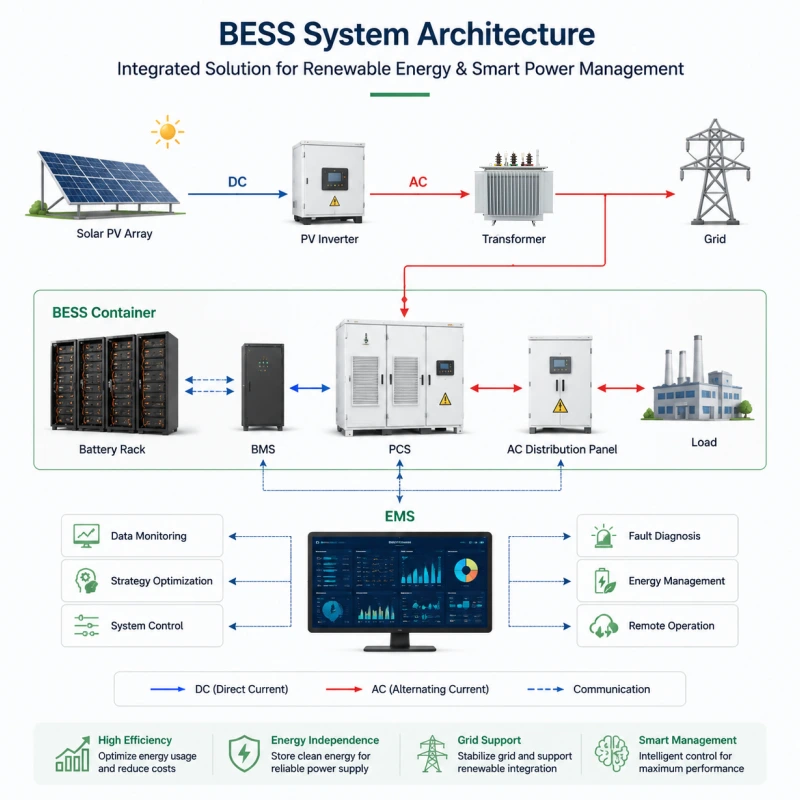
How BESS Works with Solar PV Systems
Solar photovoltaic (PV) systems generate electricity during daylight hours, but energy demand does not always match solar production. Without energy storage, excess solar power may be wasted or exported to the grid at low economic value.
By integrating BESS with solar PV, businesses and utilities can maximize renewable energy utilization.
Typical Solar + BESS Operation:
1. Energy Generation
Solar panels generate clean electricity during the day.
2. Energy Storage
When solar production exceeds immediate demand, surplus electricity is stored in the battery system.
3. Energy Optimization
The EMS analyzes electricity prices, consumption patterns, and grid conditions to determine the optimal charging and discharging strategy.
4. Energy Supply
Stored energy can be discharged during:
- Peak electricity price periods
- Evening consumption peaks
- Grid instability events
- Power outages
This integrated approach improves energy independence while reducing operational costs.
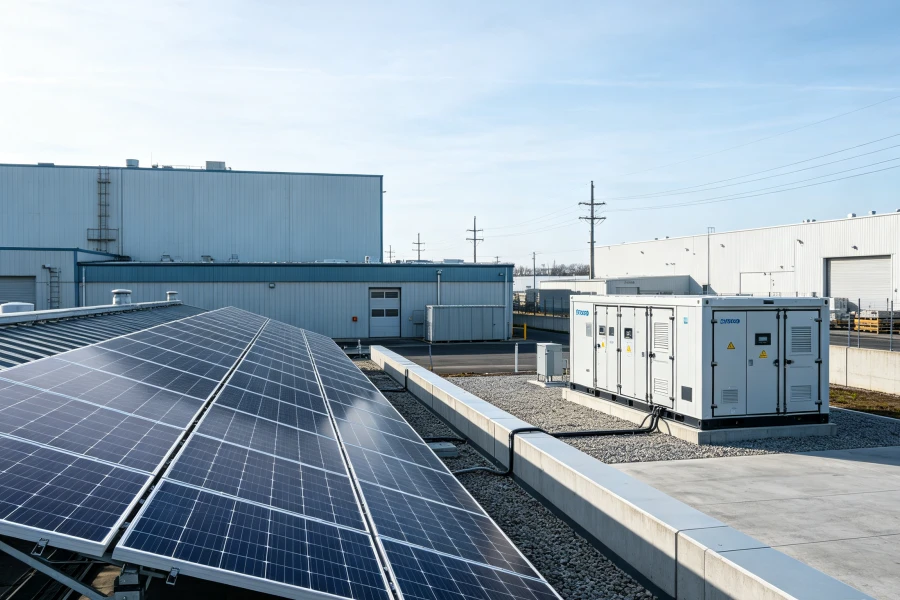
Main Components of a Battery Energy Storage System
1. LFP Battery Pack
Modern BESS solutions widely use Lithium Iron Phosphate (LiFePO4 / LFP) battery technology due to its excellent safety, long cycle life, and thermal stability.
Key advantages include:
- High safety performance
- Long service lifespan
- High charging efficiency
- Excellent thermal stability
- Low maintenance requirements
For commercial and utility-scale projects, LFP batteries provide a reliable foundation for long-duration energy storage applications.
2. Power Conversion System (PCS)
The Power Conversion System (PCS) is the connection between the battery system and the electrical grid.
Its primary functions include:
- Converting DC power from batteries into AC power
- Converting AC power into DC power during charging
- Controlling power flow
- Supporting grid interaction
A high-performance PCS ensures efficient energy conversion and stable system operation.
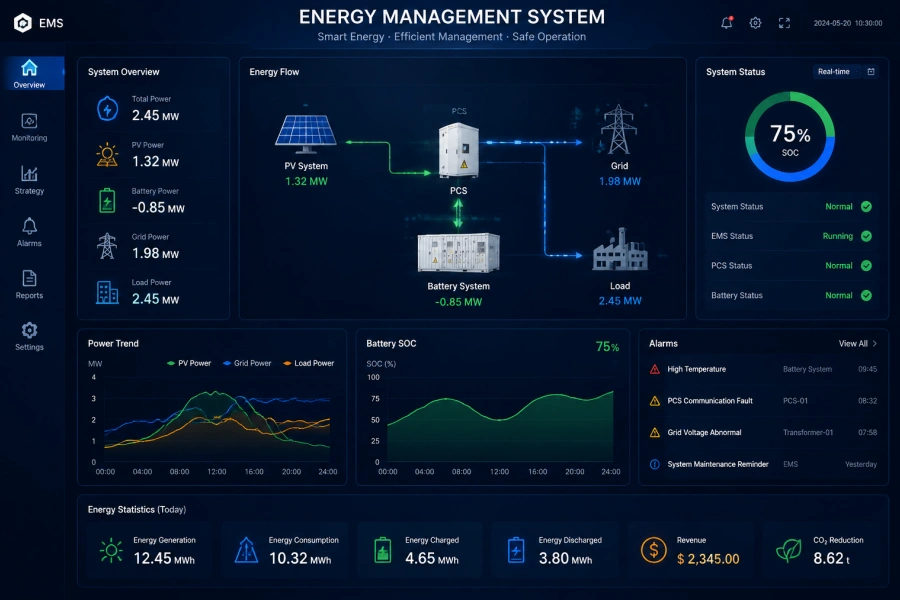
3. Energy Management System (EMS)
The Energy Management System (EMS) acts as the intelligent control center of a BESS.
EMS continuously monitors:
- Energy production
- Battery status
- Electricity demand
- Grid conditions
- Energy prices
Based on real-time data analysis, EMS optimizes:
- Charging and discharging schedules
- Renewable energy utilization
- Peak demand management
- System efficiency
Through intelligent energy control, EMS allows BESS projects to achieve maximum economic and operational benefits.
4. Thermal Management System
Temperature control is essential for maintaining battery performance and safety.
Advanced BESS solutions use:
- Liquid cooling systems
- Intelligent temperature monitoring
- Automated thermal control
Effective thermal management helps:
- Extend battery lifespan
- Improve efficiency
- Maintain stable operation under different climate conditions
5. Fire Protection and Safety System
Safety is a critical requirement for modern energy storage projects.
A complete BESS incorporates multiple protection layers, including:
- Battery monitoring systems
- Smoke and temperature detection
- Fire suppression systems
- Emergency shutdown mechanisms
These systems ensure safe operation throughout the entire project lifecycle.
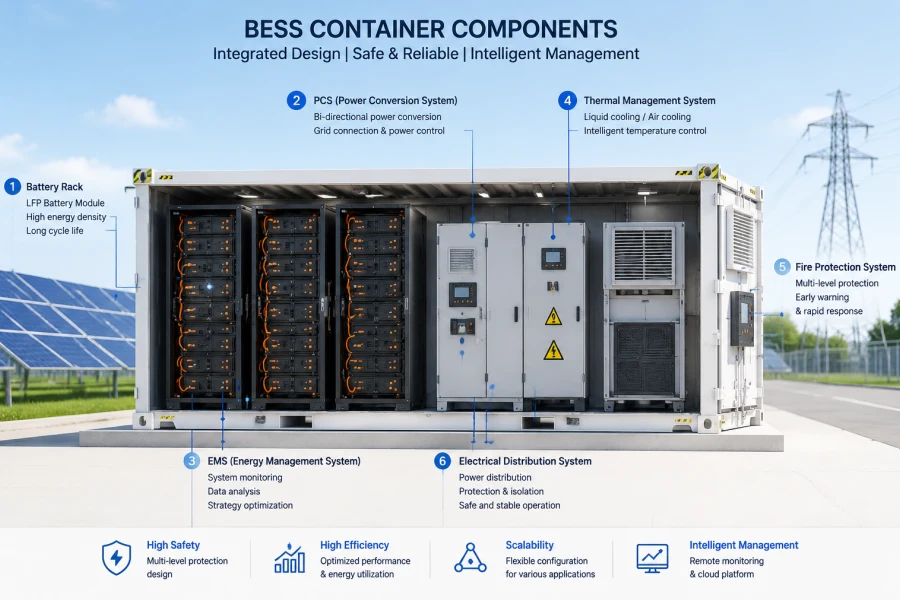
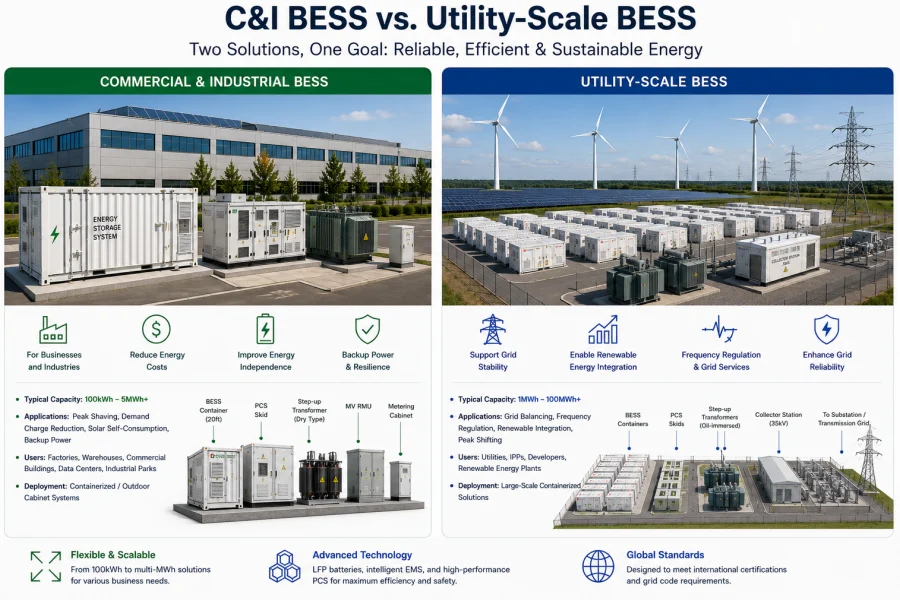
C&I BESS vs Utility-Scale BESS
Battery storage systems are designed for different applications depending on energy requirements and project scale.
Commercial & Industrial BESS (C&I)
Commercial and industrial energy storage systems are designed for businesses, factories, warehouses, office buildings, and commercial facilities.
Typical applications include:
- Electricity cost reduction
- Peak shaving
- Solar self-consumption improvement
- Backup power
- Energy resilience
Common system sizes:
100kWh – 5MWh+
Typical users:
- Manufacturing facilities
- Logistics centers
- Shopping malls
- Data centers
- Industrial parks
Utility-Scale BESS
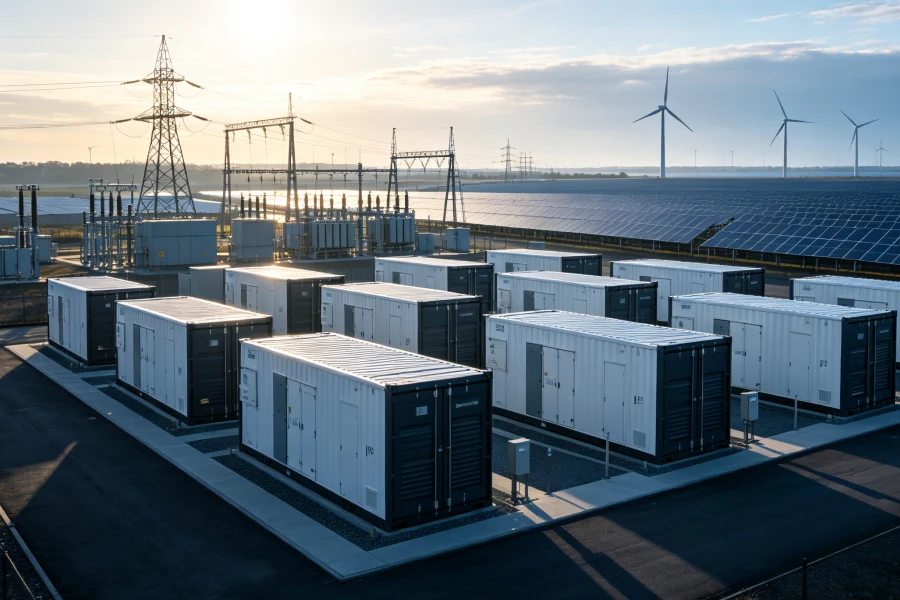
Utility-scale battery storage supports large renewable energy projects and modern power grids.
Applications include:
- Grid balancing
- Renewable energy integration
- Frequency regulation
- Peak load management
- Ancillary services
Typical project sizes:
1MWh – 100MWh+
Common deployment scenarios:
- Solar farms
- Wind power projects
- Grid substations
- Renewable energy parks
Key Benefits of Battery Energy Storage Systems
Peak Shaving and Demand Charge Reduction
Many commercial and industrial electricity users face high demand charges during peak consumption periods.
BESS can store energy during low-demand periods and discharge during peak hours, reducing electricity costs and improving energy efficiency.
Frequency Regulation and Grid Support
Energy storage provides fast response capabilities to support grid stability.
BESS can help:
- Balance electricity supply and demand
- Stabilize grid frequency
- Improve renewable energy integration
Renewable Energy Optimization
Solar and wind generation naturally fluctuate depending on weather conditions.
BESS enables:
- Higher renewable energy utilization
- Reduced renewable energy curtailment
- More predictable energy supply
By combining renewable generation with storage, clean energy becomes more reliable and dispatchable.
Backup Power and Energy Resilience
Modern businesses require reliable electricity to maintain operations.
BESS provides:
- Emergency power backup
- Reduced downtime risk
- Energy independence during grid failures
For critical facilities such as hospitals, data centers, and industrial plants, BESS significantly improves energy resilience.
How to Select the Right BESS Capacity?
Choosing the correct battery storage capacity depends on several factors:
1. Energy Consumption Profile
Analyze:
- Daily electricity usage
- Peak demand periods
- Load characteristics
2. Renewable Energy Generation
For solar-integrated projects, consider:
- PV system size
- Solar production curve
- Self-consumption targets
3. Application Objectives
Different goals require different storage configurations:
| Application | Recommended Focus |
|---|---|
| Electricity Cost Reduction | Peak shaving optimization |
| Solar Self-Consumption | Energy shifting |
| Backup Power | Required backup duration |
| Grid Services | Fast response capability |
4. Future Expansion Requirements
A scalable BESS architecture allows businesses to expand storage capacity as energy demand grows.
The Future of Battery Energy Storage Systems
As renewable energy continues expanding worldwide, BESS will become a fundamental component of future energy infrastructure.
The combination of:
- Solar PV generation
- Battery energy storage
- Smart EMS control
- EV charging infrastructure
- Microgrid technology
will create a more flexible, sustainable, and resilient energy ecosystem.
From commercial facilities to utility-scale renewable projects, advanced BESS solutions are enabling the transition toward a cleaner and smarter energy future.
Why Choose Splendor Energy for BESS Solutions?
Splendor Energy provides integrated battery energy storage solutions combining engineering expertise, global equipment supply, and intelligent energy system integration.
Our BESS solutions support:
- Commercial & Industrial Energy Storage
- Utility-Scale Battery Storage
- Solar + Storage Systems
- Microgrid Applications
- EV Charging Energy Hubs
- Renewable Energy Infrastructure Projects
With a complete approach covering system design, equipment integration, and project support, Splendor Energy helps customers build reliable and future-ready energy systems worldwide.
Explore Our BESS Solutions
Discover how Splendor Energy can help your business achieve lower energy costs, improved resilience, and optimized renewable energy utilization through advanced Battery Energy Storage Systems.
Contact Splendor Energy for customized BESS solutions for your next energy project.