

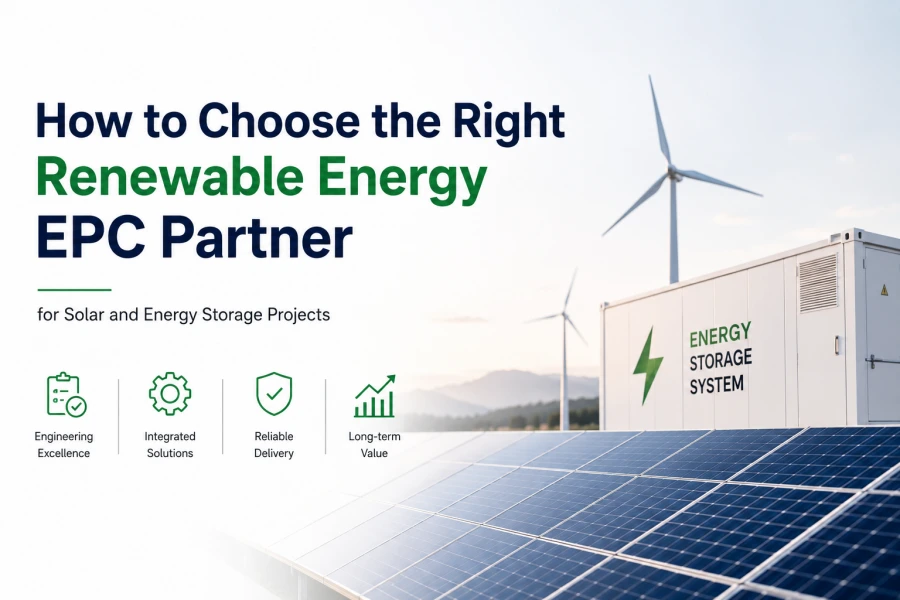
How to Choose a Reliable EPC Partner for Renewable Energy Projects
As renewable energy adoption accelerates worldwide, businesses, investors, and project developers are increasingly investing in solar photovoltaic (PV), battery energy storage systems (BESS), microgrids, and integrated energy infrastructure.
However, the success of a renewable energy project depends not only on selecting high-quality equipment but also on choosing the right Renewable Energy EPC partner.
A professional EPC contractor connects engineering design, equipment procurement, system integration, project execution, and technical support into one complete solution.
The right EPC partner can help reduce project risks, optimize system performance, control costs, and ensure long-term energy reliability.
What Does an Energy EPC Company Do?
EPC stands for:
Engineering – Procurement – Construction
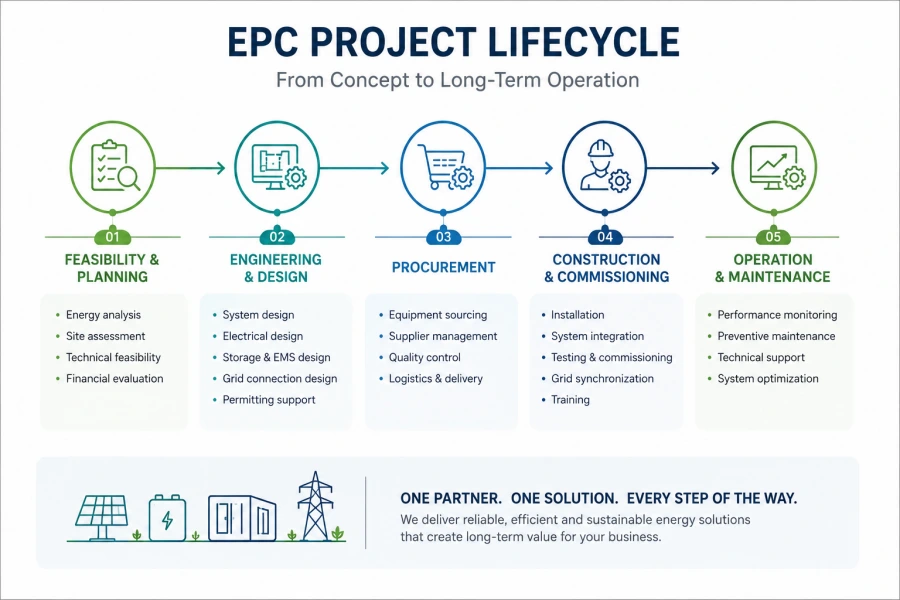
A renewable energy EPC company provides integrated services covering the complete project lifecycle.
Engineering
The engineering phase defines the technical foundation of the project.
A professional EPC partner provides:
- Energy demand analysis.
- Solar resource assessment.
- System design.
- Electrical design.
- Battery storage sizing.
- Grid connection planning.
- Energy management strategy.
For Solar Plus Storage projects, engineering decisions directly impact:
- System efficiency.
- Return on investment.
- Long-term operational reliability.
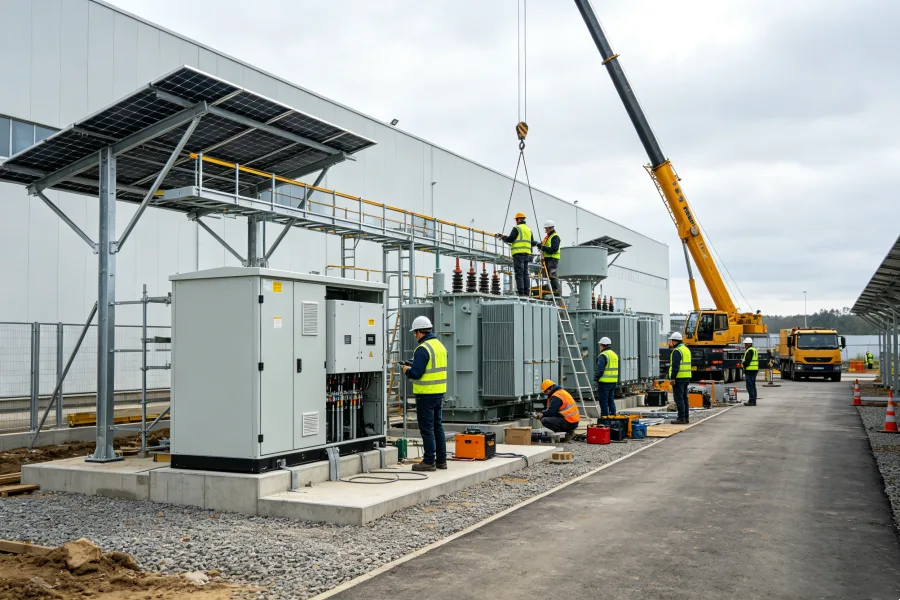
Procurement
Renewable energy projects involve multiple equipment categories, including:
Solar PV Systems
- N-Type TOPCon modules.
- HJT solar modules.
- Bifacial dual-glass modules.
- Solar inverters.
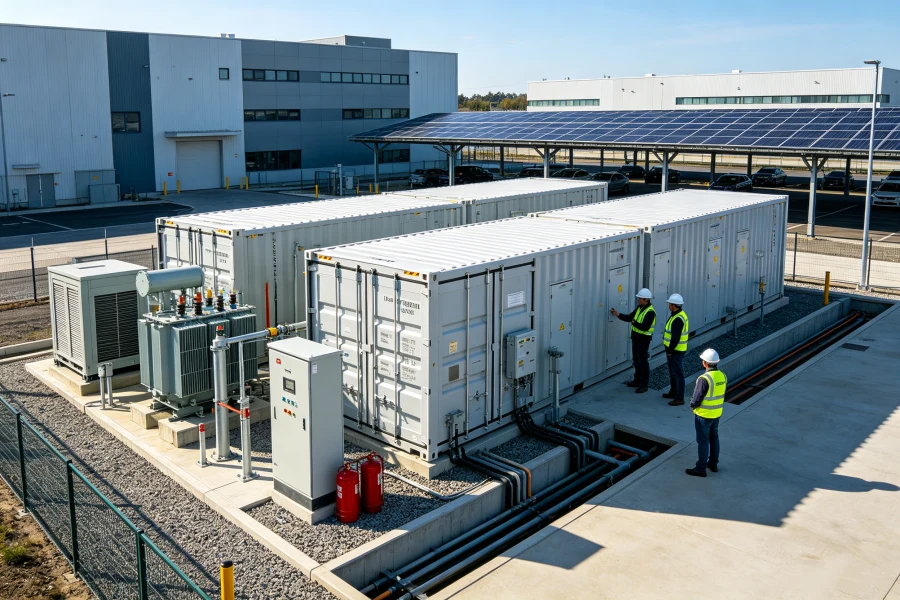
Battery Energy Storage Systems
- LFP battery cells.
- Battery packs.
- PCS systems.
- BMS.
- EMS platforms.
- Thermal management systems.
- Fire protection systems.
Electrical Infrastructure
- Transformers.
- Switchgear.
- Distribution equipment.
- Protection systems.
A reliable EPC partner should have strong supplier relationships and the ability to select suitable equipment based on project requirements.
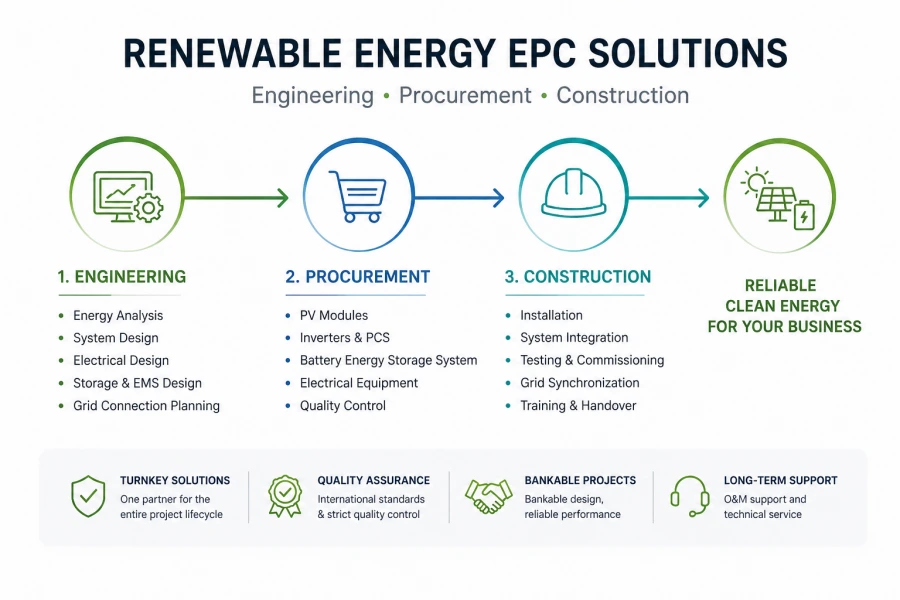
Construction and System Integration
The construction phase transforms engineering designs into operational energy systems.
Professional EPC integration includes:
- Equipment installation coordination.
- Electrical connection.
- System commissioning.
- Performance testing.
- Grid synchronization.
- Operation training.
For complex projects combining:
- Solar PV.
- Battery storage.
- EV charging.
- Microgrid systems.
system integration capability becomes especially important.
Manufacturer vs Installer vs EPC Integrator
When selecting a renewable energy partner, businesses should understand the difference between these roles.
1. Equipment Manufacturer
A manufacturer focuses primarily on producing specific products.
Examples:
- Solar panels.
- Batteries.
- Inverters.
- Charging equipment.
Advantages:
✔ Strong product expertise
✔ Manufacturing capability
✔ Standardized products
Limitations:
- Usually focused on individual products.
- May not provide complete system design.
- Limited responsibility for multi-equipment integration.
2. Installation Company
An installer mainly focuses on project construction and onsite deployment.
Typical services include:
- Mounting solar panels.
- Electrical installation.
- Equipment connection.
Advantages:
✔ Local installation capability
✔ Familiar with regional regulations
Limitations:
- May not provide advanced engineering design.
- May depend on third-party equipment suppliers.
- Limited experience with large integrated energy systems.
3. Renewable Energy EPC Integrator
An EPC integrator provides complete project solutions by combining:
- Engineering expertise.
- Equipment sourcing.
- System integration.
- Technical coordination.
A professional Renewable Energy EPC partner can manage:
Solar PV + BESS + EMS + Microgrid + EV Charging + Grid Infrastructure
as one integrated energy ecosystem.
This reduces communication complexity and project risks.
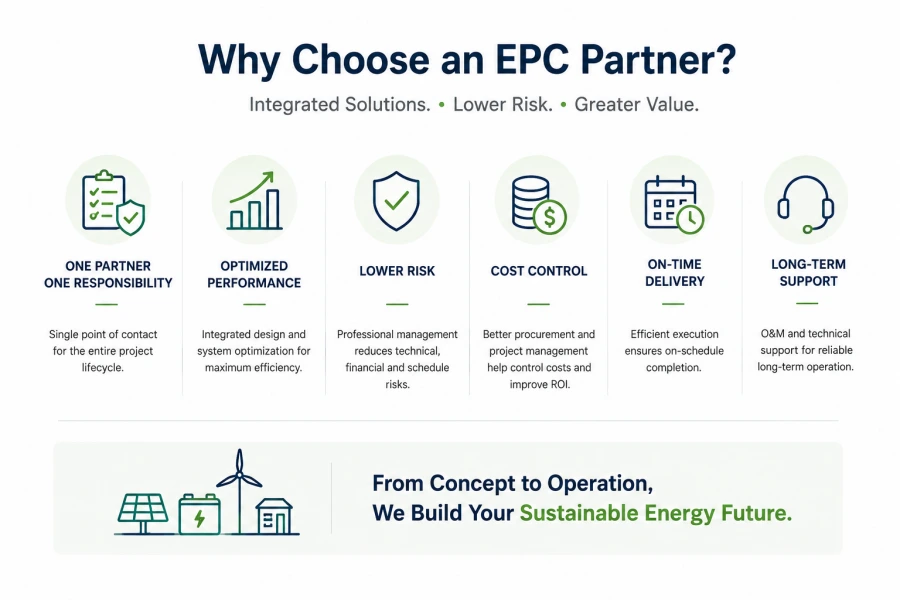
Key Evaluation Criteria When Choosing an EPC Partner
1. Engineering Capability
Engineering capability is one of the most important factors when selecting an EPC contractor.
A qualified partner should understand:
- Solar system design.
- Battery capacity optimization.
- Load analysis.
- Grid requirements.
- Energy management strategies.
For example, a commercial Solar Plus Storage project requires correct sizing between:
- PV generation capacity.
- Battery capacity.
- Load demand.
- Peak electricity periods.
Poor system design can reduce project returns and create operational problems.
2. Reliable Equipment Supply Chain
Renewable energy projects involve multiple suppliers and technologies.
A strong EPC partner should have access to reliable manufacturers and global supply chains.
Important considerations include:
Battery Technology
- Lithium Iron Phosphate (LFP).
- Long cycle life.
- Safety certification.
- Thermal management.
Solar Technology
- High-efficiency PV modules.
- Tier-1 manufacturers.
- Long-term warranty support.
Electrical Equipment
- Certified transformers.
- Switchgear.
- Protection devices.
Splendor Energy works with established renewable energy manufacturers to provide integrated equipment solutions for global projects.
3. Proven Project Experience
Project experience demonstrates whether an EPC contractor can successfully deliver complex systems.
Evaluate:
- Previous solar installations.
- Battery storage deployments.
- Commercial and industrial projects.
- Utility-scale experience.
- Microgrid applications.
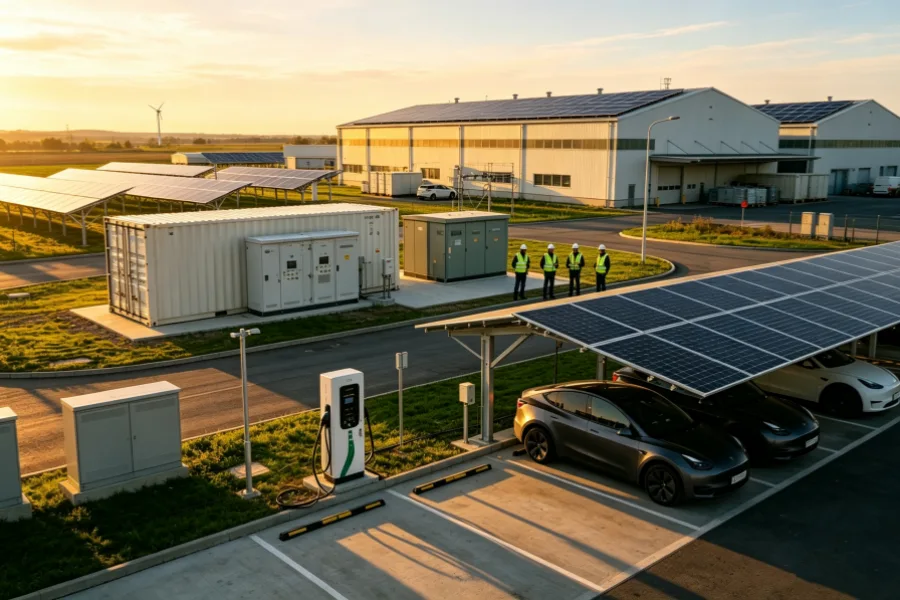
Relevant experience includes:
- Factory solar systems.
- Warehouse rooftop PV.
- Commercial battery storage.
- EV charging energy hubs.
- Renewable microgrids.
4. Certifications and Technical Standards
Reliable EPC partners should understand international standards and certification requirements.
Common certifications include:
Solar PV
- IEC standards.
- TÜV certification.
- CE certification.
Battery Energy Storage
- UL 9540A.
- IEC 62619.
- UN38.3.
Grid Connection
- VDE-AR-N 4105.
- Regional grid compliance standards.
Certification compliance helps ensure:
- Safety.
- Reliability.
- Regulatory approval.
5. After-Sales Support and Long-Term Service
Renewable energy projects operate for decades.
A reliable EPC partner should provide:
- Remote monitoring.
- System diagnostics.
- Technical support.
- Maintenance guidance.
- Performance optimization.
For BESS projects, continuous monitoring of:
- Battery health.
- Temperature.
- Charging cycles.
- System efficiency.
is essential for long-term performance.
Why Integrated EPC Solutions Reduce Project Risk
Working with multiple independent suppliers can create challenges:
- Equipment compatibility issues.
- Communication problems.
- Delayed commissioning.
- Responsibility disputes.
An integrated EPC solution provides:
Single Project Responsibility
One partner manages:
- Engineering.
- Procurement.
- Integration.
- Technical coordination.
Better System Compatibility
Solar modules, batteries, inverters, EMS, and electrical equipment are designed to work together.
Faster Project Delivery
Integrated project management reduces delays between different suppliers.
Optimized Total Project Cost
Professional EPC partners can select the most suitable equipment combination instead of focusing only on individual product prices.
The Future of Renewable Energy Requires Integrated Solutions
The renewable energy market is evolving from single technology deployment toward complete energy ecosystems.
Modern businesses increasingly require:
- Solar PV generation.
- Battery energy storage.
- Smart EMS control.
- EV charging infrastructure.
- Microgrid capability.
A capable EPC partner helps organizations transition from traditional energy consumption to intelligent energy management.
Conclusion
Choosing the right Renewable Energy EPC partner is one of the most important decisions for any solar or battery storage project.
The ideal EPC contractor should provide:
✔ Strong engineering capability
✔ Reliable equipment supply chain
✔ Proven project experience
✔ International certification knowledge
✔ Long-term technical support
By partnering with an experienced EPC integrator, businesses can reduce project risks, improve system performance, and achieve long-term renewable energy goals.
Explore Our EPC Services
Splendor Energy provides integrated renewable energy EPC solutions combining:
- Solar PV systems.
- Battery Energy Storage Systems (BESS).
- EMS platforms.
- Microgrid solutions.
- EV charging infrastructure.
- Electrical equipment integration.
From project design and equipment selection to complete system integration, Splendor Energy helps global customers build reliable, scalable, and intelligent clean energy infrastructure.